← All Projects

Case Study · Fintech

Harmoney

India's first digital B2B bond trading platform — streamlining trading for institutions, wealth firms, and brokers through a unified marketplace.

Harmoney bond trading dashboard
Role Founding Product Designer
Scope India’s first digital B2B bond trading platform
Domain Fintech · B2B · 0→1
Stakeholders Institutions · Wealth firms · Brokers
Product Managers CEO (domain strategy)
Designers Kaushik — Founding Product Designer

Problem & Context

Bond traders could find listings online — but still closed deals across four to six separate screens.

The impact: Market watch, order book, execution, and settlement lived apart. Slow handoffs meant missed prices and more middlemen.

The bet: Put the highest-frequency trading actions in one place so institutions, wealth firms, and brokers could work without constant switching — and Harmoney could earn a daily seat at the desk.

Step 02 / What I Did

Scope covered end-to-end UX from discovery through launch: offline trading workflow mapping, product structure, key screens for web and mobile, and translation of complex trading logic into clear interactions.

The design foundation was built from scratch — tokens, reusable components, and handoff specs — with ongoing alignment alongside the CEO, CTO, and engineers on scope decisions, usability feedback, and release QA.

01
Discovery
→
02
Research
→
03
Ideation
→
04
Design
→
05
Testing
Design System (from zero) User Interviews Information Architecture Web + Mobile Rapid Iteration Design QA

Team & Timeline

Team Structure

Leadership: CEO (domain strategy) + CTO (platform architecture)
Design: Kaushik — Founding Product Designer
Engineering: Frontend + backend team for trading workflows and infrastructure

Story

From Listing Site to Trading Platform

Harmoney started as a bond listing site; the product goal was a single trading environment where discovery, comparison, order placement, and execution tracking share one workflow — replacing the four-to-six-screen setup traders used daily.

Harmoney story frame 1
Story 01
1 / 12
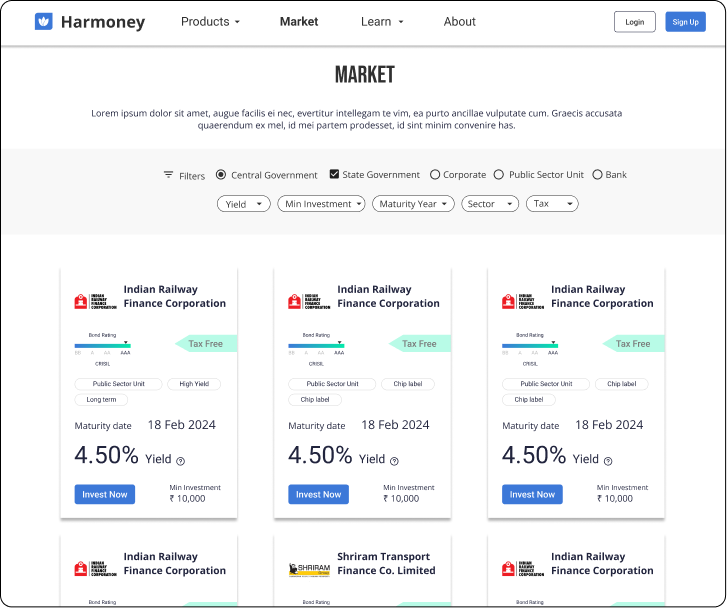
Early Harmoney website for bond search
Bond Searching Website

Understanding the Product

At launch, Harmoney functioned as a bond-search site while trading still ran offline through calls and manual follow-ups. The target state was one connected workflow: discover bonds, compare options, place orders, and track execution without leaving the platform.

The Problem

Bond trades still closed over phone calls — so prices moved while nobody was looking.

Brokers negotiated verbally, hung up, and typed the deal into a spreadsheet. If a price changed while they were on another call, there was no way to know. Wealth managers often couldn’t even see which bonds were available.

The CEO came from bond trading and knew this could be digitized. The design challenge was different from most consumer products: institutional traders optimize for speed and dense data, not visual polish.

Understanding the product and transition from informational website to digital bond trading platform
Understanding the Product

User Research

User Interview & User Persona

Nilesh Gaikwad active trader interview

Nilesh Gaikwad (Active Trader)

An active trader emphasized a unified platform for bond data, quick pricing, avoiding missed profitable quotes, and the relationship between faster trades and commission. They highlighted the benefit of minimizing intermediaries.
Amol Singh institutional investor interview

Amol Singh (Institutional Investor)

An institutional investor stressed efficient data consolidation, fast deal closure, quick pricing, and capturing transparent profitable quotes. They emphasized reducing intermediaries and speeding up processes.

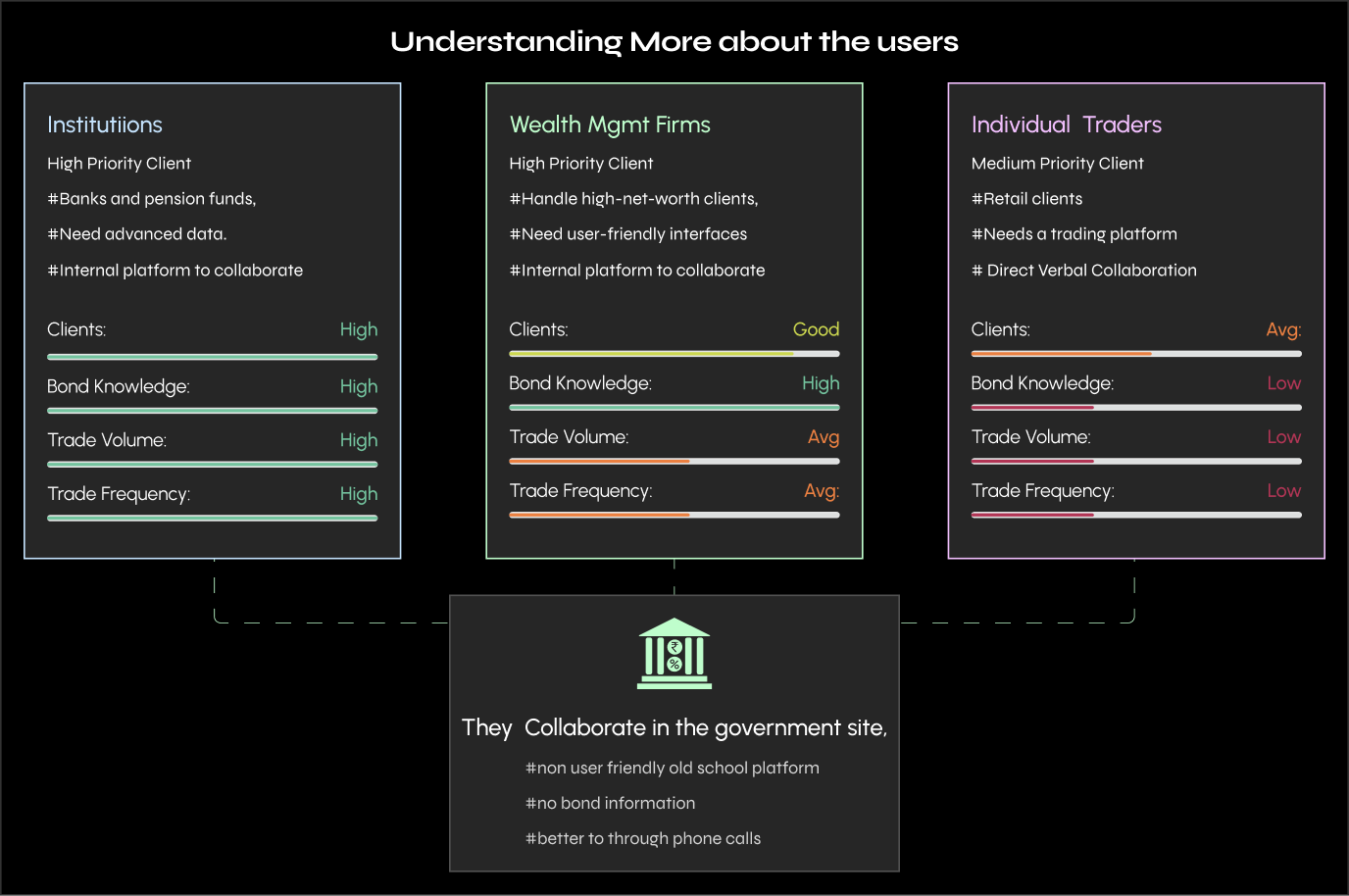
Bond trader · daily desk user

  • Opens: market data, quotes, and deal follow-ups across multiple screens every day.
  • Problem: prices and availability are split apart — profitable quotes disappear while they switch tools or wait on a call.
  • Needs: one screen with live bond info, fast pricing, and fewer middlemen so deals close before the window closes.
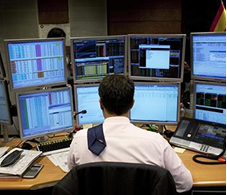
Bond trader monitors representing customer persona
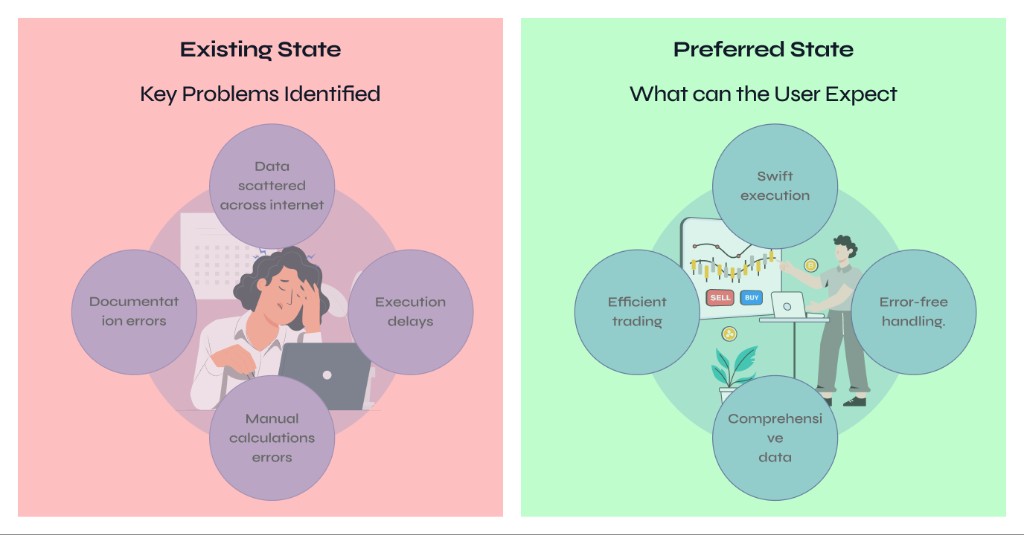
Existing state and preferred state comparison
Existing vs Preferred State
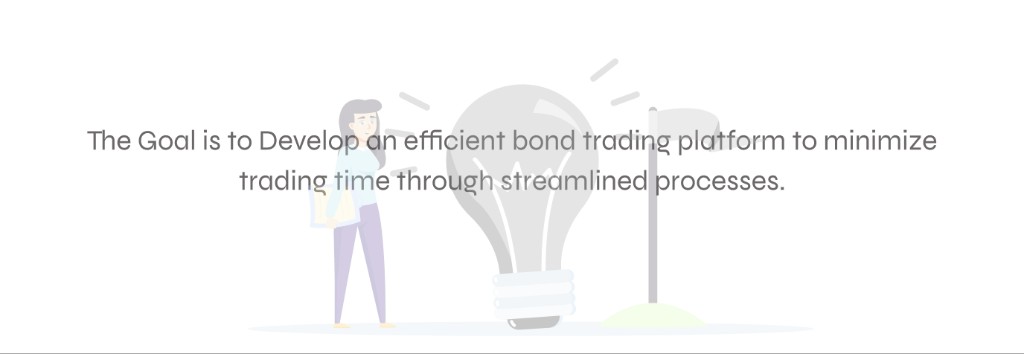
Goal: develop an efficient bond trading platform
Goal: Efficient Bond Trading Platform
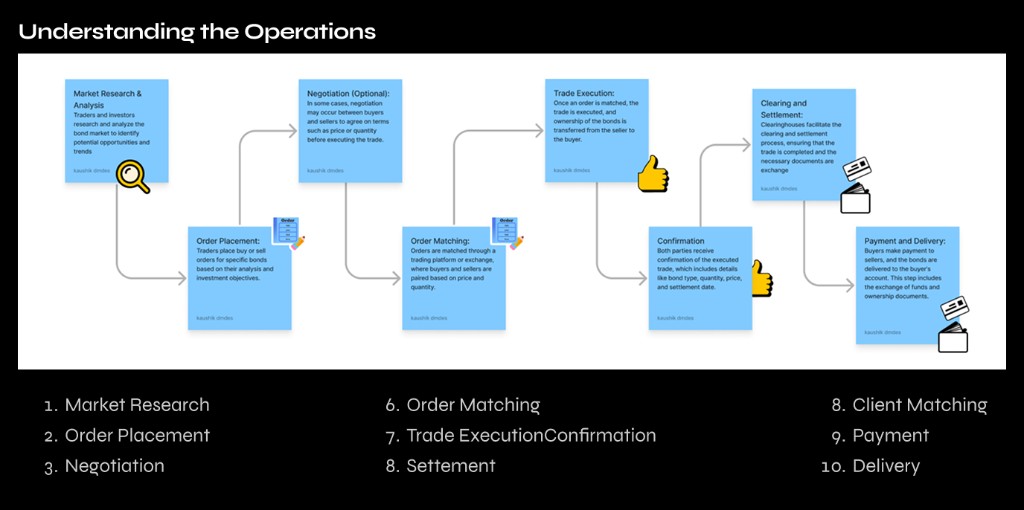
Understanding the operations flow
Operations Flow Mapping
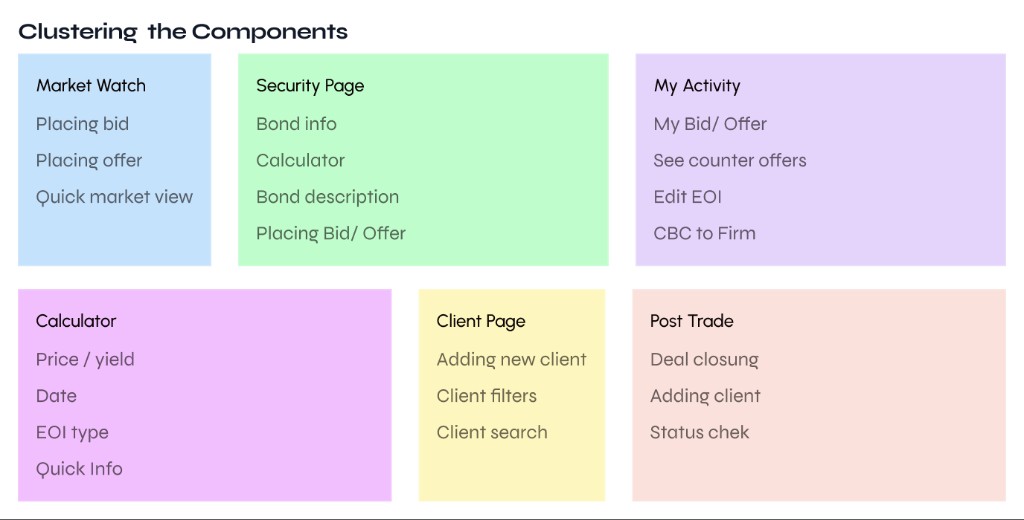
Clustering the components
Component Clustering
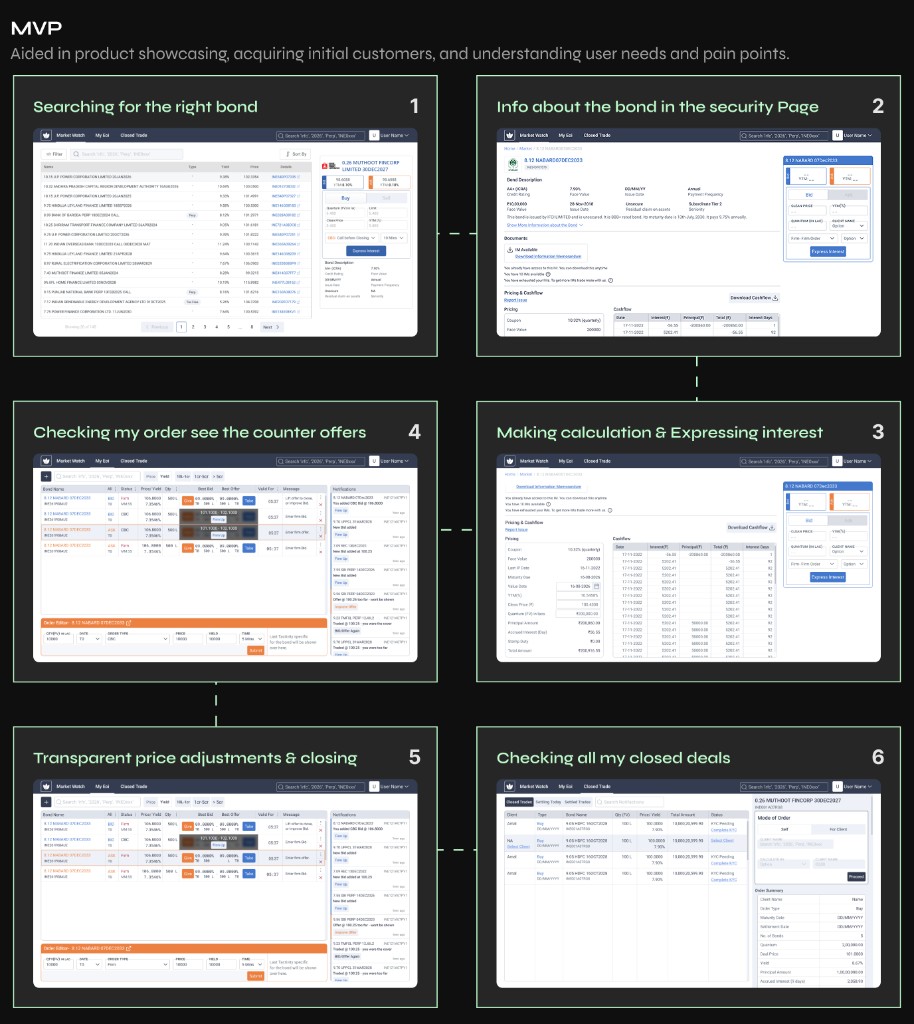
MVP flow and closed deals workflow
MVP Flow & Closed Deals
Customer feedback summary
Customer Feedback Summary
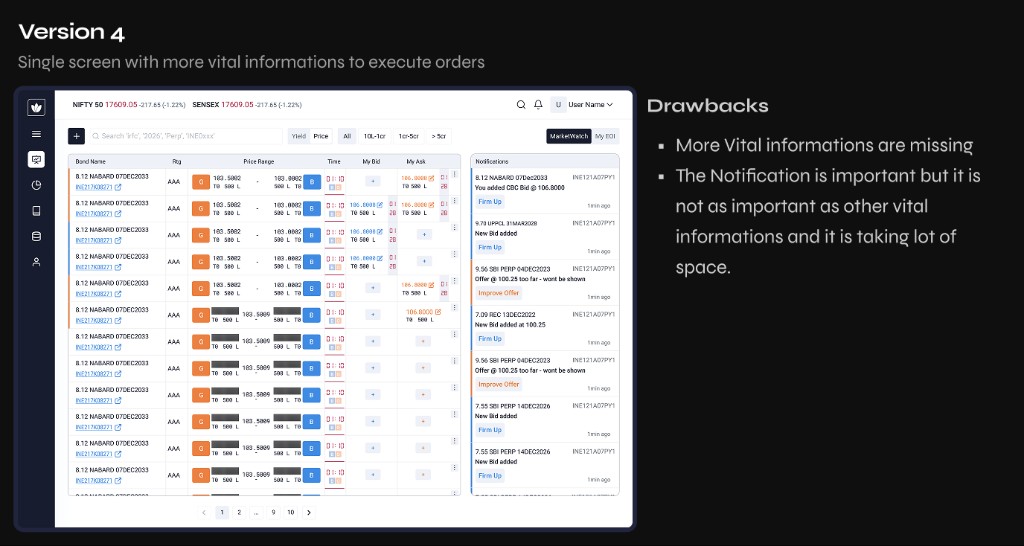
Version four interface and drawbacks
Version Four Interface Review

Final Design

Key Screens & Workflows

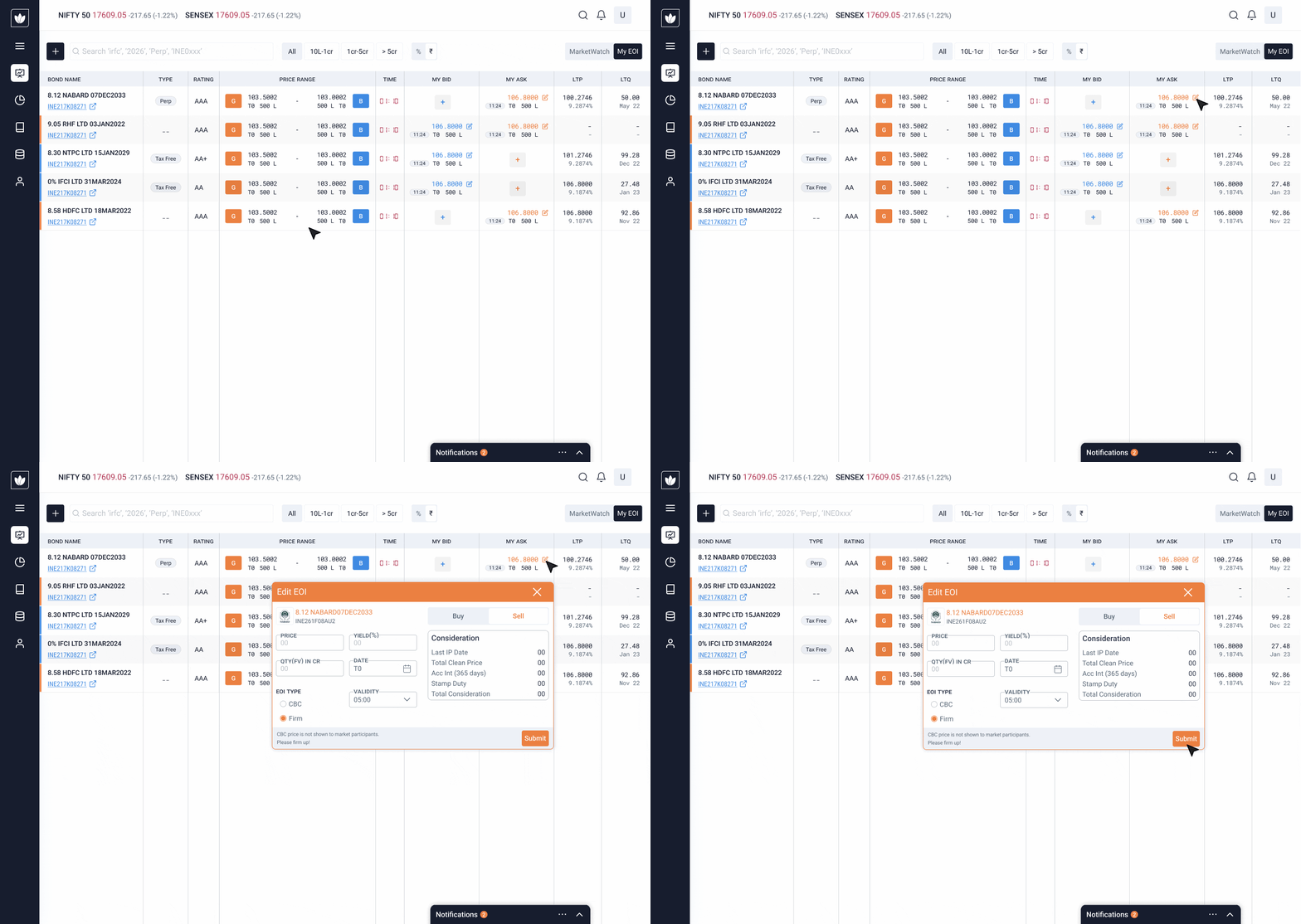
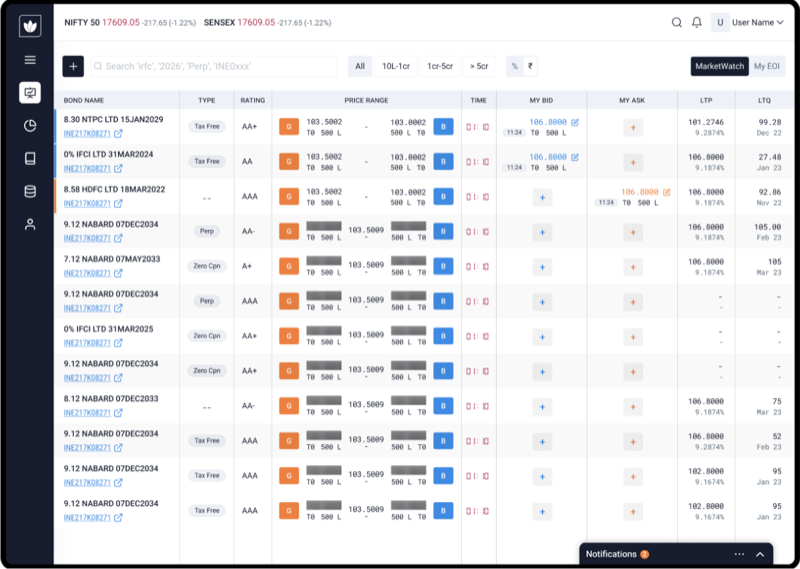
The final design balances information density with usability — desktop optimized for institutional traders, mobile for quick checks and on-the-go trading.

Harmoney workflow demo 1
Flow demo 01: A single screen to trade bonds effortlessly
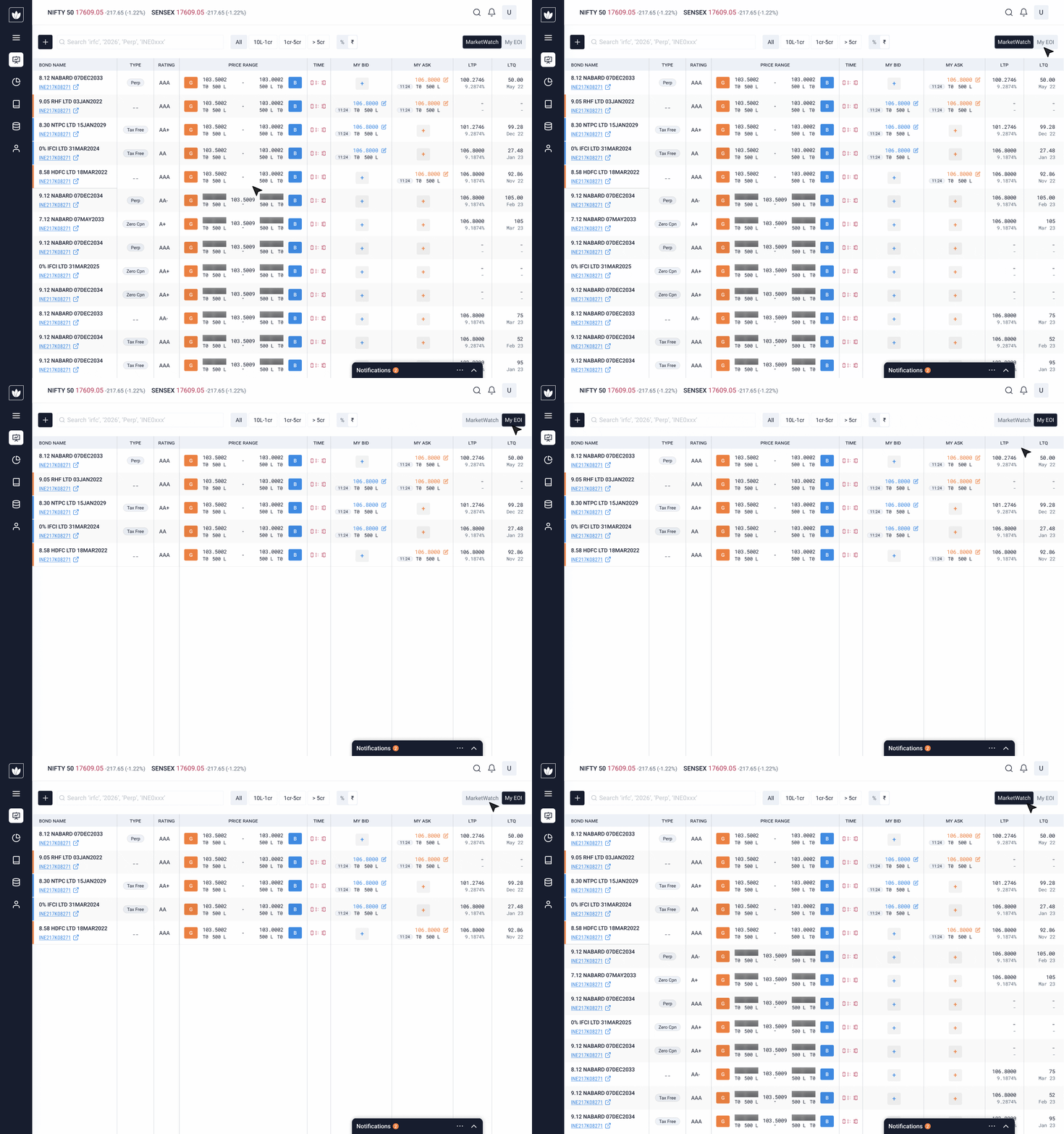
Harmoney workflow demo 2
Flow Demo 02: A single screen for Market Watch and My Orders
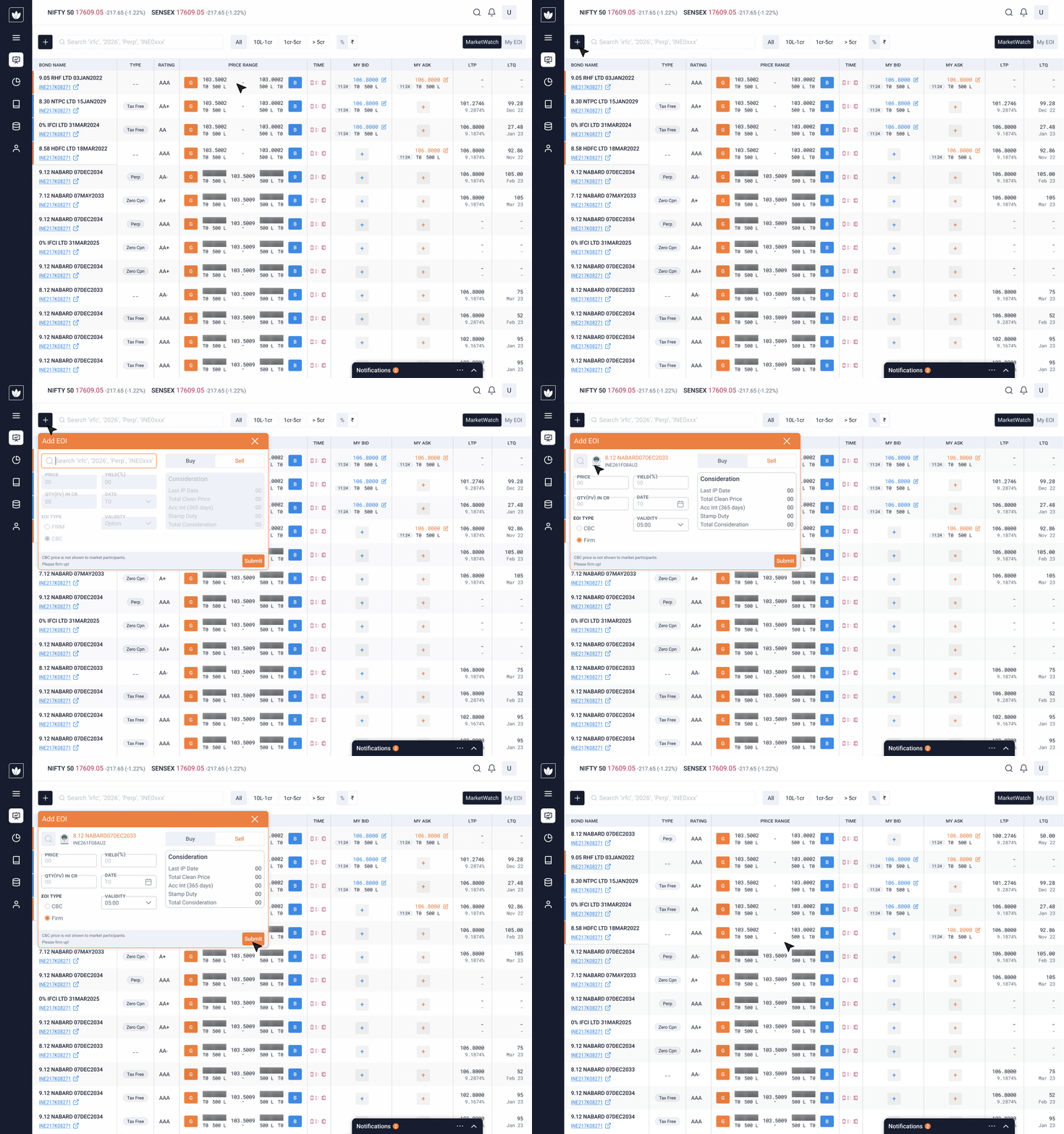
Harmoney workflow demo 3
Flow Demo 03: Easy way to edit and trade bonds

Outcomes

What changed after launch

Monthly traded volume grew roughly 6× over the first year after the redesigned order-matching and closure flows shipped — a figure leadership cited in internal reviews and that I observed through successive user-testing cycles alongside product, not a metric I owned or measured in isolation.

Directional outcome the design enabled; exact attribution sits with product and business leadership.

Reflections

Key takeaways from the project

As the sole designer at an early-stage startup, there was no design manager or design ops function to lean on — every decision had to hold up on its own.

01 · Learn the domain first

Design decisions stayed guesses until bond trading mechanics were understood — not a surface read, but the actual workflows the CEO was building around. Domain fluency, not visual polish, made the interaction design defensible.

02 · Systems outlast screens

No single designer can specify every state of every component by hand. Building a reusable system — tokens, components, patterns — let engineering extrapolate correctly to states not personally drawn.

03 · Ship, then correct with real usage

Harmoney launched with a deliberately scoped first version, then improved based on how real traders actually used it. That feedback loop produced a better product faster than holding the release for a more complete design would have.

Confidentiality note: This project is under NDA. Design is complete and moving into development.
Interface redrawn and figures synthesized for case study presentation.
The core architectural logic and UX constraints remain true to production.

More work View all work